Stop Asian Hate es Un movimiento en contra del racismo, el odio y el maltrato hacia la comunidad asiática en Estados Unidos ha venido creciendo en los últimos días y se ha expandido a través de Internet. Durante el último año, la retórica dañina y los ataques hacia esta población ha incrementado, en parte, debido al origen de la pandemia de Covid-19.
Sigue leyendo «Movimientos del último año: #StopAsianHate»Categoría: Sin Categoría
Movements from the last year: #StopAsianHate
Stop Asian Hate is a movement against racism, hatred and mistreatment towards the Asian community in the United States has been growing in recent days and has spread through the Internet. Over the past year, harmful rhetoric and attacks on this population have increased, in part, due to the origin of the Covid-19 pandemic.
Sigue leyendo «Movements from the last year: #StopAsianHate»Movimientos de los últimos años: #BlackLivesMatter
El movimiento Black Lives Matter empezó en 2013 siendo un hashtag un año después de la muerte de Trayvon Martin en Florida.
Martin, un joven negro de 17 años, murió en 2012 a manos de George Zimmerman, un capitán de vigilancia del vecindario en Sanford, cuando regresaba caminando a la casa de la prometida de su padre en Sanford, Florida, tras parar en una tienda a comprar unos bocadillos. Zimmerman reconoció que le disparó a Martin alegando defensa propia, pero fue absuelto tras un mediático juicio.
Sigue leyendo «Movimientos de los últimos años: #BlackLivesMatter»Movements from the last year: #BlackLivesMatter
The Black Lives Matter movement began in 2013 as a hashtag a year after Trayvon Martin’s death in Florida.
Martin, a 17-year-old black man, was killed in 2012 by George Zimmerman, a neighborhood watch captain in Sanford, as he was walking back to the home of his father’s fiancee in Sanford, Florida, after stopping at a store at buy some sandwiches. Zimmerman acknowledged that he shot Martin claiming self-defense, but was acquitted after a media trial.
The movement, whose motto is «Black Lives Matter,» was founded «in response to the acquittal of Trayvon Martin’s killer.»
As the co-founder of the Patrisse Khan-Cullors movement wrote in 2019, the original phrase was written in a letter to the black community by Alicia Garza, a black writer and speaker, who lives in Oakland, California, after Martin’s death. And Khan-Cullors made it a hashtag so that through social media the community could help combat racism against black people around the world.
What started as a social media movement took off after the death of young black Michael Brown in 2014 at the hands of a white policeman. Since then, it grew into an organization that has since expanded not only in the United States, but to Canada and the United Kingdom.
Black Lives Matter’s Mission as an organization is to «eradicate white supremacy» and intervene through local power «in the violence inflicted on black communities by the state and vigilantes.»
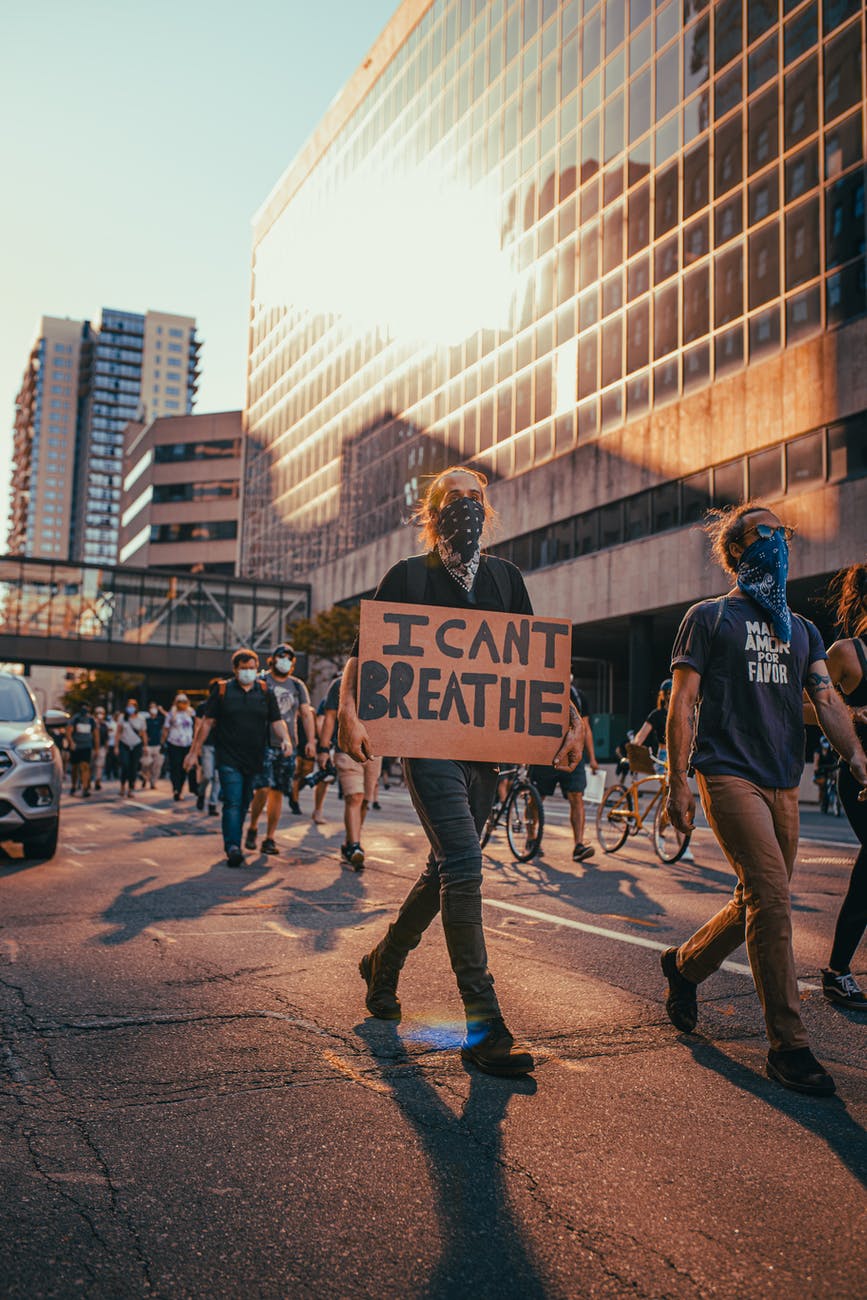
The project created by Garza, Khan-Cullors and Opal Tometi – who describe themselves as radical black leaders – has increased its visibility in recent years, but had a new moment of visibility in May 2020 after the death of George Floyd at the hands of a white cop in Minneapolis, who for almost 9 minutes pressed his knee on Floyd’s neck. The responsible officer, Derek Chauvin, was fired and faces charges of involuntary manslaughter and manslaughter.
The movement «helped spark the conversation around police and state violence» against black people, says its website, adding that the movement’s commitment is to «fight together and imagine and create a world free of anti-blackness, where every black person has the social, economic and political power to prosper »
And Floyd’s death sparked mass protests not only in Minneapolis, but in various cities across the United States and around the world calling for more and more to join the initial call: that the lives of black people matter.
Movimientos de los últimos años: #MeToo
El Me too movement es el nombre de un movimiento iniciado de forma viral como hashtag en las redes sociales. Surgió en octubre de 2017 para denunciar la agresión sexual y el acoso sexual, a raíz de las acusaciones de abuso sexual contra el productor de cine y ejecutivo estadounidense Harvey Weinstein. La frase, utilizada durante mucho tiempo en este sentido por la activista social Tarana Burke, fue popularizada por la actriz Alyssa Milano, quién animó a las mujeres a tuitear sus experiencias para demostrar la naturaleza extendida del comportamiento misógino. Desde entonces el hashtag ha sido utilizado por más de 500 000 personas, entre ellas muchas celebridades.
Sigue leyendo «Movimientos de los últimos años: #MeToo»Personas inspiradoras: Kalpana Chawla
Chawla nació en Karnal, India en 1961 la tercera de cuatro hijos, y murió en la tragedia del transbordador espacial Columbia ya que este se destruyo al entrar a la orbita el 1 de febrero de 2003 sobre el sur de los Estados Unidos 16 minutos antes del aterrizaje. Kalpana Chawla tenía una licencia de instructora de vuelo certificada para aviones de un motor, multimotor, planeadores, hidroaviones, e incluso para control de instrumentos en aeroplanos.
Sigue leyendo «Personas inspiradoras: Kalpana Chawla»Inspiring people: Kalpana Chawla
Chawla was born in Karnal, India in 1961 the third of four children, and died in the tragedy of the Columbia space shuttle as it was destroyed when entering orbit on February 1, 2003 over the southern United States 16 minutes before the landing. Kalpana Chawla had a certified flight instructor license for single-engine, multi-engine, gliders, seaplanes, and even for instrument control on airplanes.
Sigue leyendo «Inspiring people: Kalpana Chawla»Personas inspiradoras: Sandra Cisneros
Sandra Cisneros es una de las escritoras hispanomexicanas contemporáneas de mayor éxito a nivel mundial. Su primer libro, la novelaCasa en Mango Street ,tuvo muy buena crítica y vendió más de seis millones de copias, fue traducida a más de veinte idiomas y es obra de lectura en la escuela primaria, secundaria y universidades de Estados Unidos. En sus obras posteriores utilizó una voz narrativa infantil. Tras la publicación de Casa en Mango Street, dirigió un programa de escritura en el Guadalupe Cultural Arts Centre de San Antonio, en Texas.
Sigue leyendo «Personas inspiradoras: Sandra Cisneros»Inspiring people: Sandra Cisneros
Sandra Cisneros is one of the most successful contemporary Hispanic-Mexican writers in the world. Her first book, the novel House on Mango Street, received rave reviews, sold more than six million copies, was translated into more than twenty languages, and is read in elementary, high school, and colleges across the United States. In later works he used a child narrative voice. Following the publication of House on Mango Street, she directed a writing program at the Guadalupe Cultural Arts Center in San Antonio, Texas.
Sigue leyendo «Inspiring people: Sandra Cisneros»Personas inspiradoras: Raffi Freedman
Raffi Freedman-Gurspan es una activista estadounidense por los derechos de las personas transgénero y la primera persona abiertamente transgénero en trabajar como miembro de la Casa Blanca bajo la presidencia de Barack Obama. También fue la primera empleada legislativa abiertamente transgénero en trabajar en la Cámara de Representantes de Massachusetts. Con anterioridad se desempeñó como consejera política para el Centro Nacional para la Igualdad Transgénero, una iniciativa racial y de justicia económica en Washington y es especialista en política publica de apoyo a la comunidad LGBTQIA+. Podemos reconocer que esta comunidad es una de las que mas peso social lleva, lastimosamente algunas personas que no son parte de esta comunidad y que no comprenden sus derechos se creen con el poder de votar y decidir sobre ellos, su futuro y como se desenvuelven en la comunidad. Todos somos únicos, nadie en este planeta es igual, no debemos permitir que una diferencia sea la causa de discriminación porque todos tenemos algo diferente a los demás.
Sigue leyendo «Personas inspiradoras: Raffi Freedman» 123 por mi