Children self esteem
We can define self-esteem as the recognition of a person of their own value, it is to understand everything we are, with our good and bad qualities, but recognizing that we are unique, wonderful and worthwhile. With this that I have just told you, I will put you to reflect, remember when you were children and think of all those moments when they failed, fell or did not meet the expectations of other people. Remember what happened ?, Because in my case, my self-esteem fell, I began to doubt my abilities, I wondered how another person was capable and I did not or even came to surrender and never want to try again. And if for me it was difficult, I, who was surrounded by love in an environment in which failure was not something bad, but something that helped me to strengthen myself, imagine all those children whose self-esteem is falling more and more because There is someone who tells you that they are wonderful and that failure makes them even bigger because they will always have the opportunity to try again. Sigue leyendo «Children self esteem»
El autoestima de los niños y niñas
Podemos definir autoestima como el reconocimiento de una persona de su propio valor, es comprender todo lo que somos, con nuestras cualidades y limitaciones, siempre reconociendo que somos únicos, maravillosos y que valemos la pena. Recuerden cuando eran niños/as y piensen en todos esos momentos cuando fallaban, o no cumplían las expectativas de otras personas. ¿Recuerdan que pasaba?, pues en mi caso, mi autoestima caía, empezaba a dudar de mis capacidades, me preguntaba como otra persona era capaz y yo no o hasta llegué a rendirme y no quería intentar nunca más. Y si para mi fue difícil, yo que estaba rodeada de amor en un ambiente en el que fracasar no era algo malo, sino algo que me ayudaba a fortalecerme, imagínense a todos esos niños/as cuya autoestima ha sido menguada porque no hay alguien que les diga que son maravillosos/as y que el fracaso cuando lleva consigo un levantarse para continuar los hace aun .mas grandes porque siempre tendrán la oportunidad de volver a intentar, hasta lograrlo. Sigue leyendo «El autoestima de los niños y niñas»
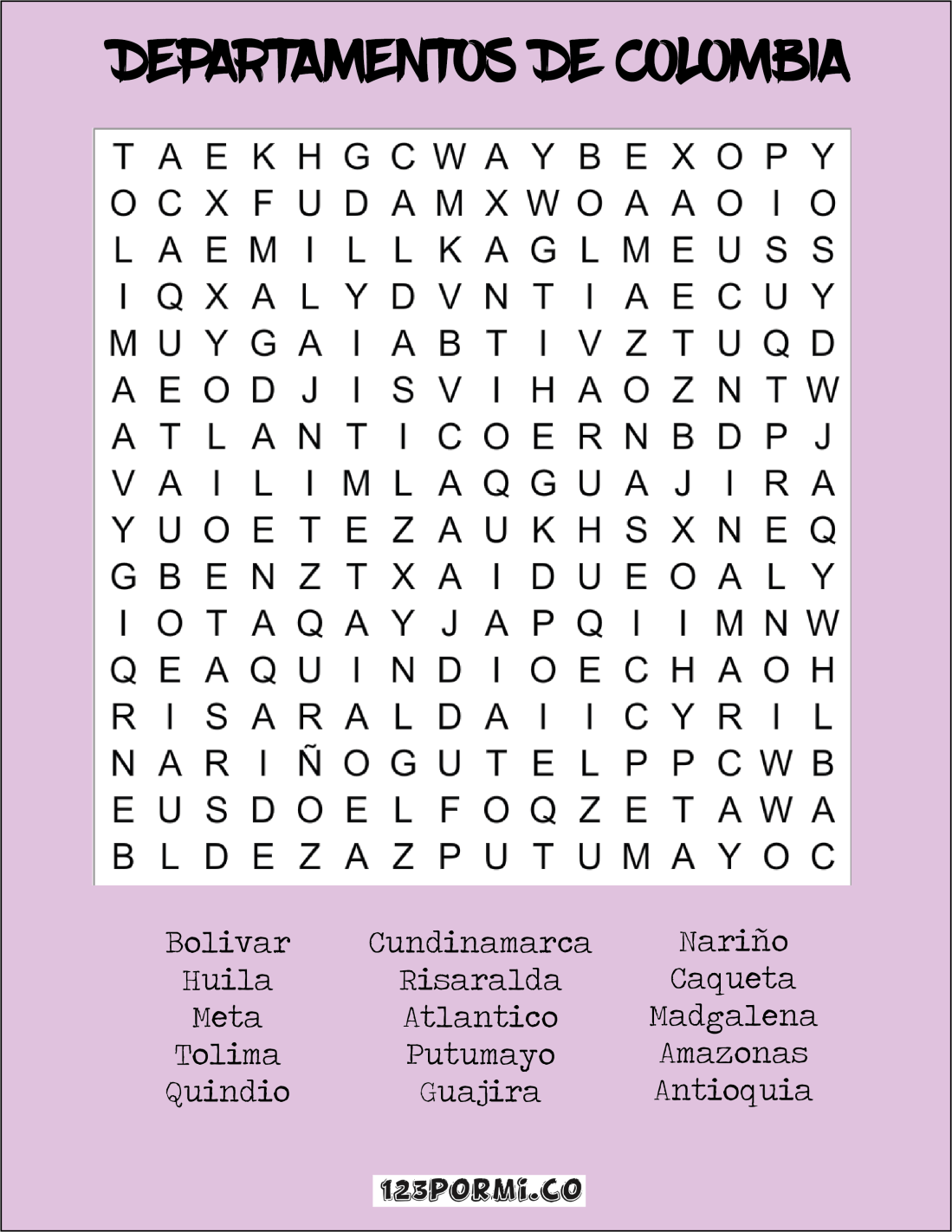
Sopa de letras Departamentos de Colombia
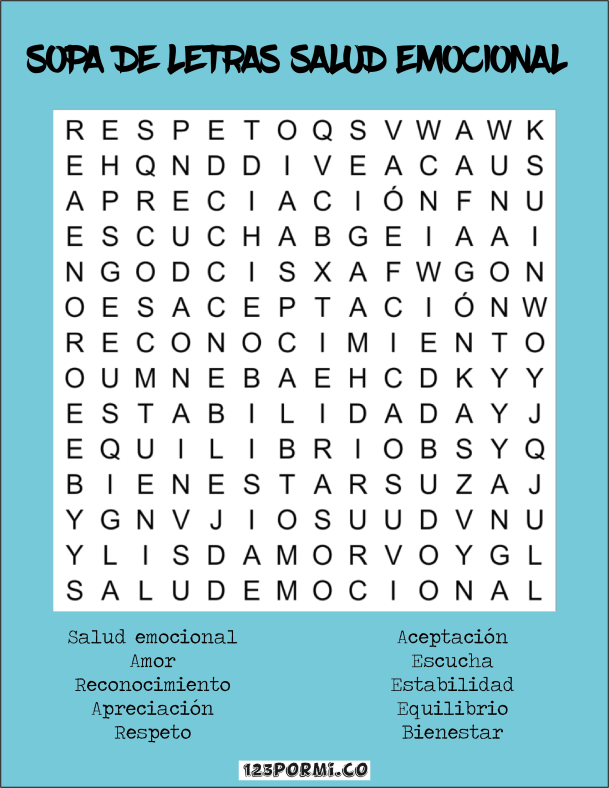
Sopa de letras Salud emocional
Children emotional health
We could define emotional health as: A state where we have control of our feelings, behaviors and emotions, to the point where they do not generate problems for an individual lead a healthy life. As adults, we know what is good and what is wrong, we know what we should do to avoid threatening our lives and we understand that we need emotional stability to lead our lives in a healthy way. Children just begin to develop criteria to understand all the emotions that surround them, sometimes it can be overwhelming for a child the idea of emotions, the idea of feeling good about himself at every moment. Sigue leyendo «Children emotional health»
La salud emocional en los niños/as
Podríamos definir la salud emocional como: Un estado donde tenemos control de nuestros sentimientos, comportamientos y emociones, hasta tal punto donde no generan problemas para un individuo llevar una vida sana. Como adultos, sabemos que está bien y que está mal, sabemos qué debemos hacer para no atentar con nuestra vida y comprendemos que necesitamos de estabilidad emocional para llevar nuestra vida de una manera sana. Los/as niños/as apenas empiezan a desarrollar criterios para comprender todas las emociones que les rodean, a veces puede ser abrumador para un niño/a la idea de las emociones, la idea de sentirse bien consigo mismo en cada momento. Sigue leyendo «La salud emocional en los niños/as»
A look into a healthy child
When we talk about boys or girls we immediately come to mind movement, joy, laughter, hugs, kisses, and dedication to others, seek to be loved, recognized and protected. Today at 123pormi.co we want to talk to you about healthy children, well, to talk about this topic, we first define what health is according to WHO «a state of complete physical, psychological and social well-being, and not just the absence of illness «, and it would complement as the quality of life of a person that remains through time generating an emotional balance that reverberates in the body. Now, let’s define who the child is according to (D, R, & G, 1998) are «unique and unrepeatable beings, managers of their permanent process of growth and development, interact with their environment and with the adults of that environment» , they also refer that «The child is a subject that feels, wishes, communicates, acts and responds to stimuli», adults have an important role to play in front of them, allowing them to develop their own personality and not impose on them our own, when this is allowed in a natural way children learn to identify and interpret it in a positive and harmonious way during their life course. Sigue leyendo «A look into a healthy child»
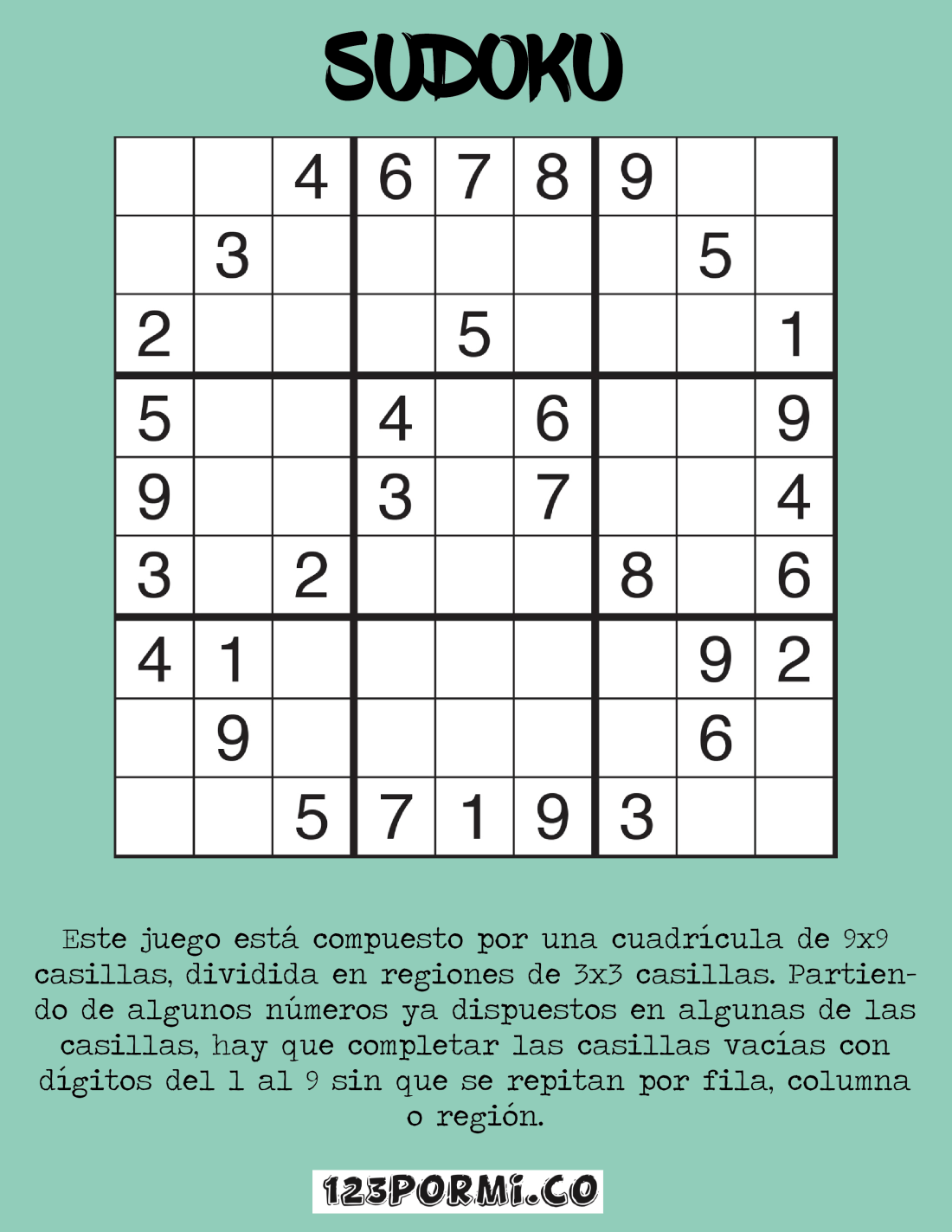
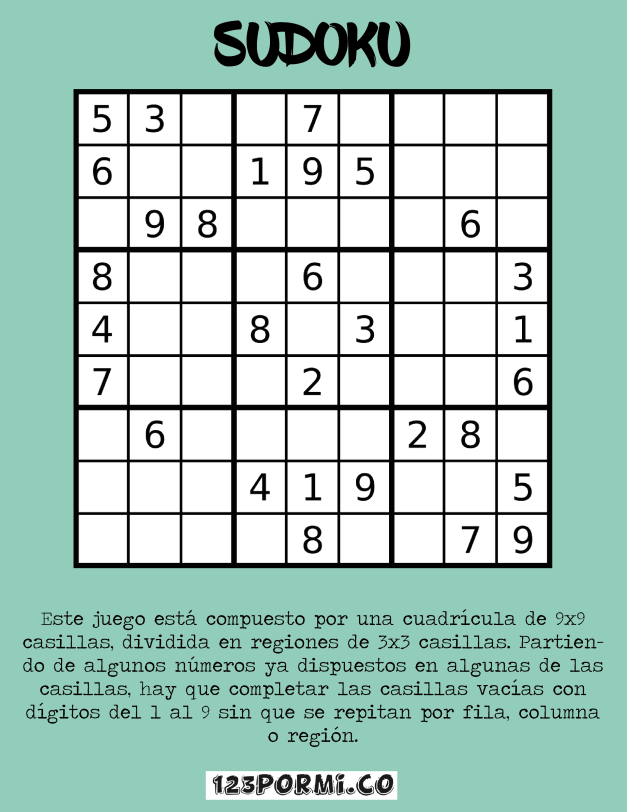
Sudoku
Una mirada al niño/a saludable
“En asuntos importantes, nadie puede saber más que el propio niño”
John Holt
Cuando hablamos de niños o niñas inmediatamente se nos viene a la mente movimiento, alegría, risas, abrazos, besos, y entrega hacia los/as demás, buscan ser amados/as, reconocidos/as y protegidos. Hoy en 123pormi.co queremos hablarles sobre los/as niños/as saludables, pues bien, para hablar sobre este tema definimos primero que es la salud según la OMS “un estado de completo bienestar físico, psicológico y social, y no sólo la ausencia de enfermedad”, y complementaría como la calidad de vida de una persona que permanece a través del tiempo generando un equilibro emocional que repercute en el cuerpo. Ahora bien, definamos quién es el niño/a según (D, R, & G, 1998) son “seres únicos e irrepetibles, gestores de su permanente proceso de crecimiento y desarrollo, interactúan con su medio y con los adultos de ese medio”, refieren además que “El/la niño/a es un sujeto que siente, desea, comunica, actúa y responde a estímulos”, los adultos tenemos un rol importante que desempeñar frente a ellos/as permitiendo que vayan desarrollando su propia personalidad y no imponer en ellos/as la nuestra, cuando esto se permite de forma natural los/las niños/as aprenden a identificarlo e interpretarlo de forma positiva y armoniosa durante su curso de vida. Sigue leyendo «Una mirada al niño/a saludable»
 123 por mi