Jerry Yang es un empresario de origen taiwanés de Internet de América, el cofundador y ex CEO de Yahoo! Inc. Creó la empresa junto con David Filo.
Mientras estudiaba en la Universidad de Stanford, él y David Filo crearon un sitio web que consistía en un directorio de otras páginas en abril de 1994, inicialmente llamado «Jerry’s Guide to the World Wide Web» (La guía de Jerry al World Wide Web). El nombre definitivo del sitio, Yahoo! es el acrónimo de «Yet Another Hierarchical Officious Oracle» (Otro Oráculo Oficioso Jerárquico Mas), sacado de copiar «Yet Another Compiler Compiler» . Aunque Yang y Filo afirman también que escogieron este nombre porque les gustó la definición general de un yahoo: «rudo, insofisticado, inculto».
Dr. David Ho is a Taiwanese scientist and doctor known as an AIDS researcher who is famous for being among the first to use peptidase inhibitors in the treatment of HIV-infected patients. Dr. David Ho has been at the forefront of AIDS research for 26 years and has published more than 350 investigations. His elegant studies, which began in 1994, uncovered the dynamic nature of HIV replication in vivo and revolutionized the way we think about this horrendous disease. These insights led Dr. Ho to experiment with a combination of antiretroviral therapy, resulting in unprecedented HIV control in patients. AIDS mortality in wealthy nations has dropped sixfold since 1996, and a titanic international effort is underway to bring this lifesaving treatment to millions of people in developing countries. Dr. Ho has been the prime mover in this medical revolution against perhaps the worst plague in human history. Ho changed his work technique and instead of treating the disease belatedly, he set out to find a way to fight it in the early stages. It was he who devised the method of treating HIV with «cocktails» of drugs, also known as Highly Active Antiretroviral Therapy. He theorized that combining potent peptidase inhibitor drugs with other anti-HIV drugs could more effectively treat the disease, and after some trial and error, his assumption turned out to be correct. Dr. Ho’s research team is currently working on developing a vaccine to stop the spread of the HIV / AIDS pandemic. In addition, Dr. Ho is at the head of a consortium of Chinese and American organizations to help combat the HIV / AIDS epidemic in China.
El doctor David Ho es un científico y doctor Taiwanés conocido por ser un investigador sobre el sida célebre por ser de los primeros en utilizar los inhibidores de peptidasa en el tratamiento de pacientes infectados por el HIV.
El doctor David Ho ha estado a la vanguardia de la investigación sobre el sida durante 26 años y ha publicado más de 350 investigaciones. Sus elegantes estudios, que comenzaron en 1994, desvelaron la naturaleza dinámica de la replicación del HIV in vivo y revolucionó la forma en que concebimos esta horrenda enfermedad. Estos conocimientos hicieron que el Dr. Ho experimentara una combinación de terapia antirretroviral, resultando en un control del HIV sin precedentes en los pacientes. La mortalidad del sida en las naciones pudientes se ha reducido en seis veces desde 1996 y se está llevando a cabo un titánico esfuerzo internacional para llevar este tratamiento salvador a millones de personas en países en desarrollo. El Dr. Ho ha sido el motor principal de esta revolución médica contra la que quizás sea la peor plaga en la historia de la humanidad.
Chien-Shiung Wu is known primarily for one particular experiment, the first experiment to show unequivocally and definitively that the previous assumption that parity was preserved in the weak nuclear force was invalid. However, at that time she had already made many other substantial contributions to nuclear physics and she was recognized as one of the greatest experimental physicists of her time. She had an unparalleled ability to assess the demands of the experiment, as well as the capabilities and limitations of the tools at her disposal. She easily identified possible sources of error, both in her own work and that of others, and used that knowledge in planning the next experimental investigation. When she tested theoretical models by searching for phenomena not yet observed, she was always alert to pitfalls or difficulties that could invalidate the investigation, and she did what was necessary to avoid them. A great scientist whose story began on May 31, 1912.
Chien-Shiung Wu es conocida principalmente por un experimento en particular, el primer experimento en demostrar, de forma inequívoca y definitiva, que la anterior suposición de que se conservaba la paridad en la fuerza nuclear débil no era válida. Sin embargo, por aquel entonces ya había hecho muchas otras aportaciones substanciales a la física nuclear siendo reconocida como uno de los mayores físicos experimentales de su tiempo. Contaba con una habilidad sin igual para valorar las exigencias del experimento, así como las capacidades y limitaciones de las herramientas de que disponía. Identificaba con facilidad las posibles fuentes de error, tanto en su propio trabajo como en el de otros, y utilizaba dicho conocimiento en la planificación de la próxima investigación experimental. Cuando ponía a prueba los modelos teóricos mediante la búsqueda de fenómenos todavía no observados, siempre estaba alerta a las trampas o dificultades que podían invalidar la investigación y hacía lo necesario para evitarlas. Una gran científica cuya historia empezó el 31 de mayo de 1912.
Stop Asian Hate is a movement against racism, hatred and mistreatment towards the Asian community in the United States has been growing in recent days and has spread through the Internet. Over the past year, harmful rhetoric and attacks on this population have increased, in part, due to the origin of the Covid-19 pandemic.
Stop Asian Hate es Un movimiento en contra del racismo, el odio y el maltrato hacia la comunidad asiática en Estados Unidos ha venido creciendo en los últimos días y se ha expandido a través de Internet. Durante el último año, la retórica dañina y los ataques hacia esta población ha incrementado, en parte, debido al origen de la pandemia de Covid-19.
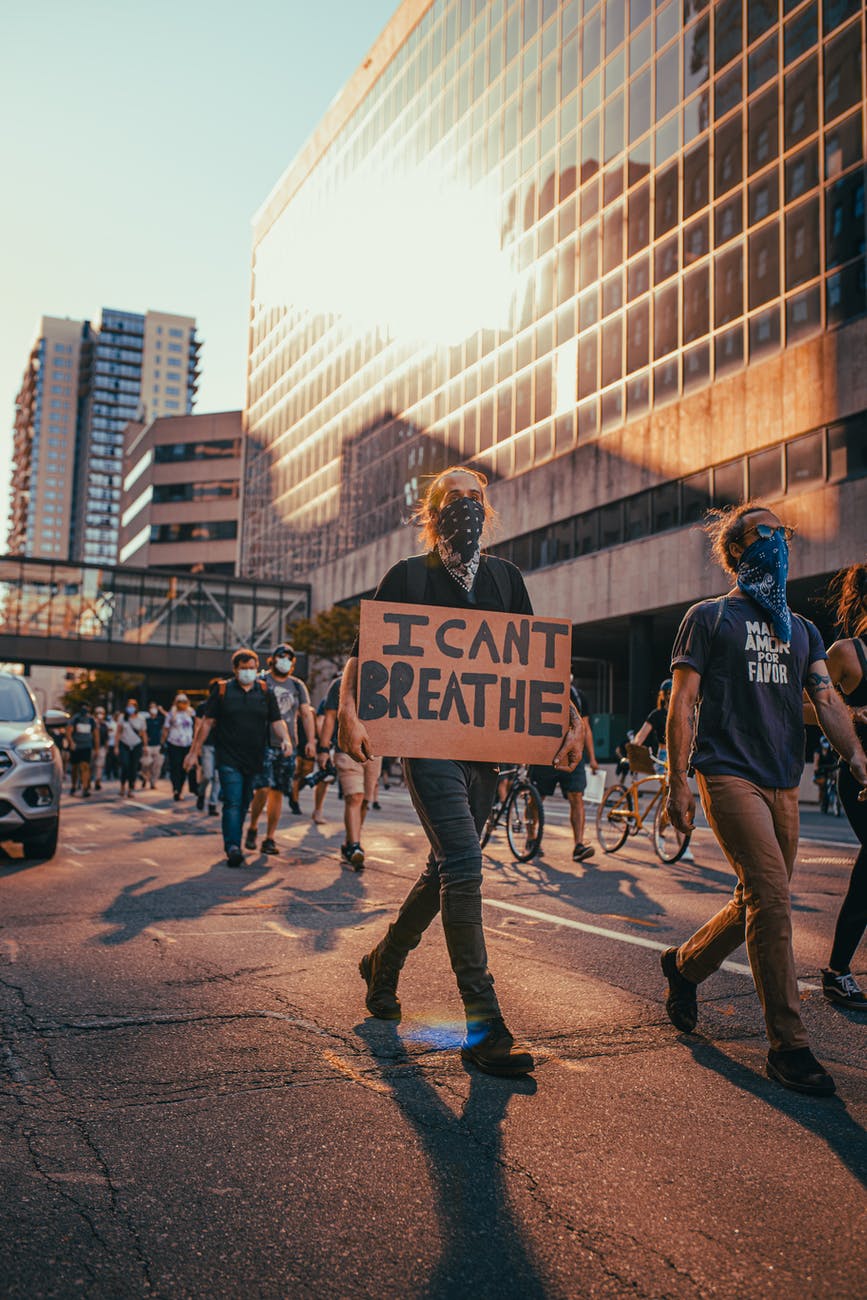
The Black Lives Matter movement began in 2013 as a hashtag a year after Trayvon Martin’s death in Florida. Martin, a 17-year-old black man, was killed in 2012 by George Zimmerman, a neighborhood watch captain in Sanford, as he was walking back to the home of his father’s fiancee in Sanford, Florida, after stopping at a store at buy some sandwiches. Zimmerman acknowledged that he shot Martin claiming self-defense, but was acquitted after a media trial. The movement, whose motto is «Black Lives Matter,» was founded «in response to the acquittal of Trayvon Martin’s killer.» As the co-founder of the Patrisse Khan-Cullors movement wrote in 2019, the original phrase was written in a letter to the black community by Alicia Garza, a black writer and speaker, who lives in Oakland, California, after Martin’s death. And Khan-Cullors made it a hashtag so that through social media the community could help combat racism against black people around the world. What started as a social media movement took off after the death of young black Michael Brown in 2014 at the hands of a white policeman. Since then, it grew into an organization that has since expanded not only in the United States, but to Canada and the United Kingdom. Black Lives Matter’s Mission as an organization is to «eradicate white supremacy» and intervene through local power «in the violence inflicted on black communities by the state and vigilantes.» The project created by Garza, Khan-Cullors and Opal Tometi – who describe themselves as radical black leaders – has increased its visibility in recent years, but had a new moment of visibility in May 2020 after the death of George Floyd at the hands of a white cop in Minneapolis, who for almost 9 minutes pressed his knee on Floyd’s neck. The responsible officer, Derek Chauvin, was fired and faces charges of involuntary manslaughter and manslaughter. The movement «helped spark the conversation around police and state violence» against black people, says its website, adding that the movement’s commitment is to «fight together and imagine and create a world free of anti-blackness, where every black person has the social, economic and political power to prosper » And Floyd’s death sparked mass protests not only in Minneapolis, but in various cities across the United States and around the world calling for more and more to join the initial call: that the lives of black people matter.
El movimiento Black Lives Matter empezó en 2013 siendo un hashtag un año después de la muerte de Trayvon Martin en Florida.
Martin, un joven negro de 17 años, murió en 2012 a manos de George Zimmerman, un capitán de vigilancia del vecindario en Sanford, cuando regresaba caminando a la casa de la prometida de su padre en Sanford, Florida, tras parar en una tienda a comprar unos bocadillos. Zimmerman reconoció que le disparó a Martin alegando defensa propia, pero fue absuelto tras un mediático juicio.
El Me too movement es el nombre de un movimiento iniciado de forma viral como hashtag en las redes sociales. Surgió en octubre de 2017 para denunciar la agresión sexual y el acoso sexual, a raíz de las acusaciones de abuso sexual contra el productor de cine y ejecutivo estadounidense Harvey Weinstein. La frase, utilizada durante mucho tiempo en este sentido por la activista social Tarana Burke, fue popularizada por la actriz Alyssa Milano, quién animó a las mujeres a tuitear sus experiencias para demostrar la naturaleza extendida del comportamiento misógino. Desde entonces el hashtag ha sido utilizado por más de 500 000 personas, entre ellas muchas celebridades.
 123 por mi