
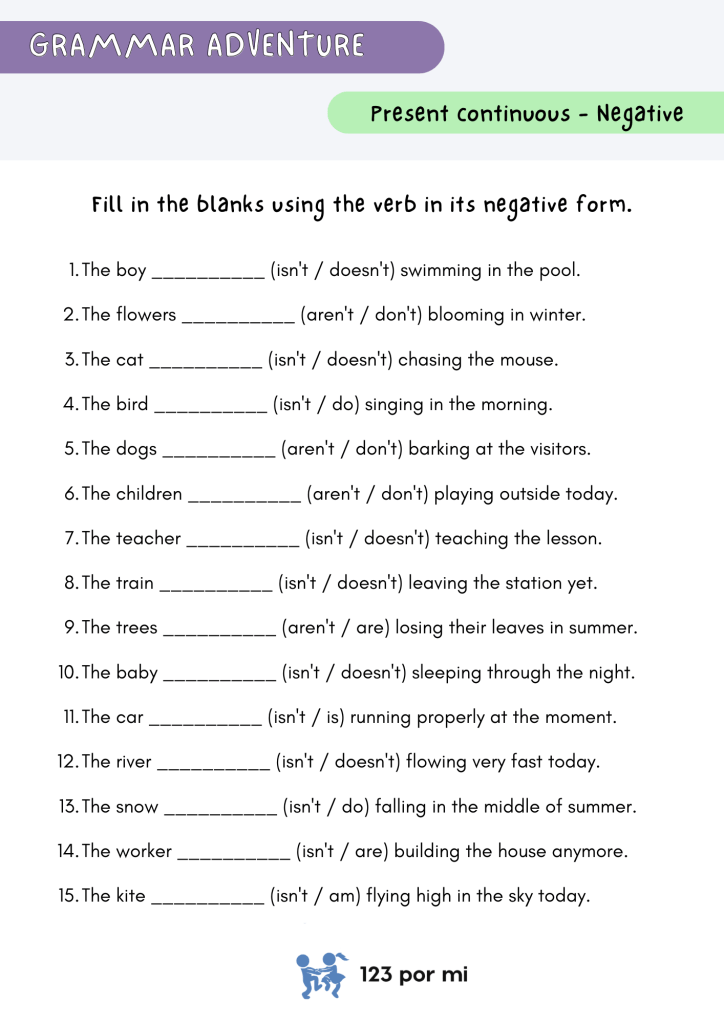
Grammar worksheet: Present continuos affirmative

Choose the correct option
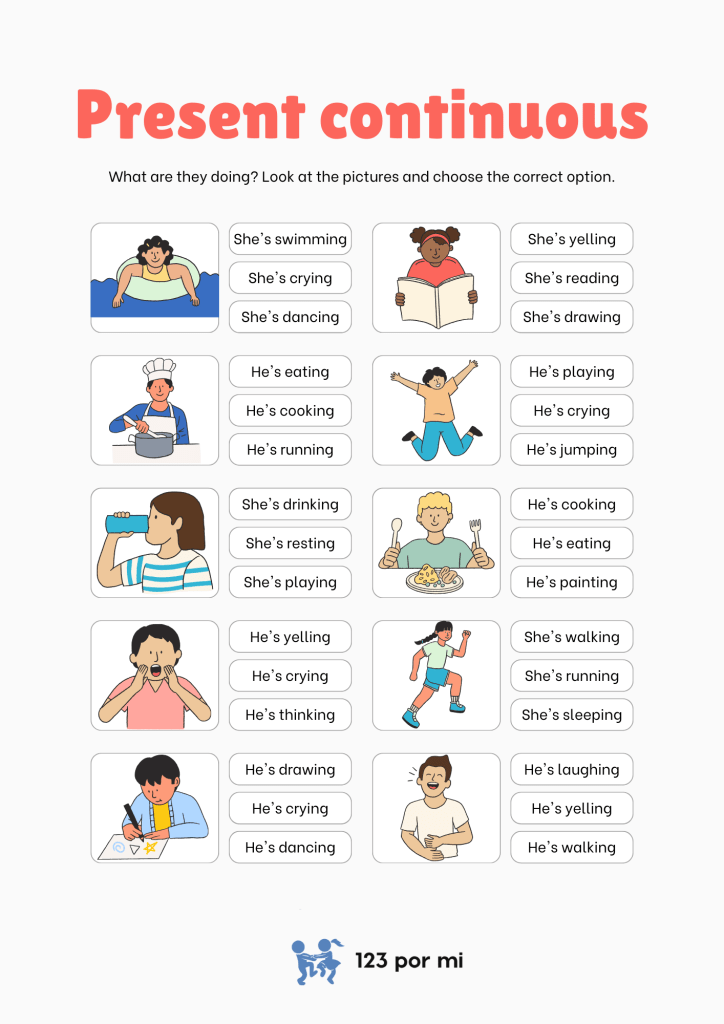
Circle the correct adjectives

Circle the correct emotions
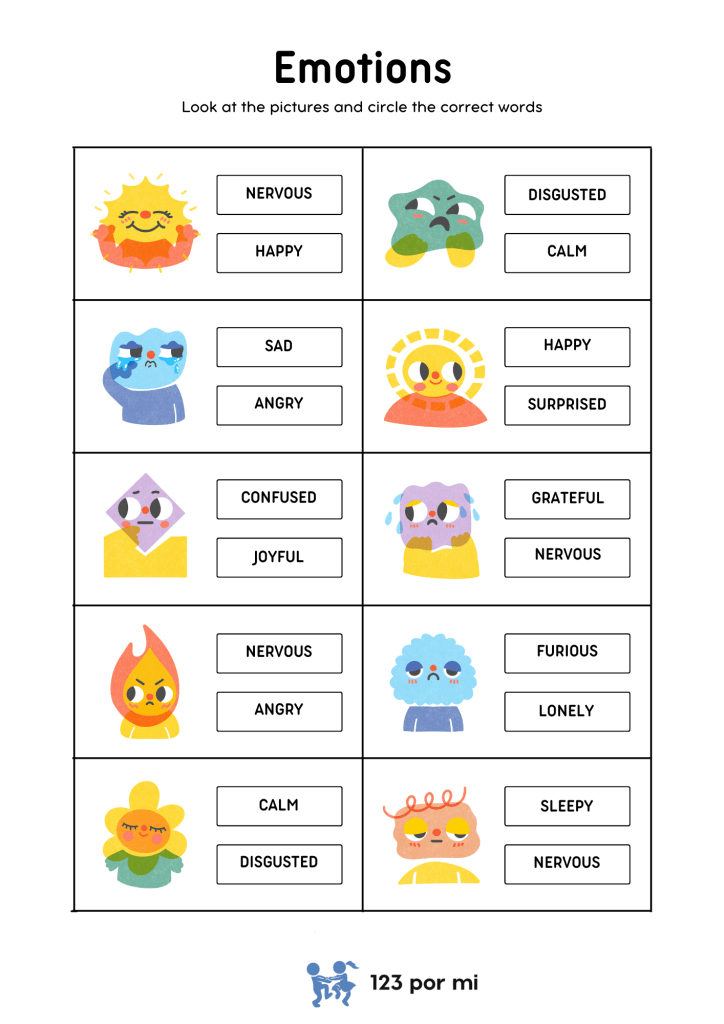
Complete the verbs
Places in the city

Completa el diagrama de Venn

Consejos Efectivos de Estudio y Métodos de Estudio para Estudiantes
Lograr el éxito académico va más allá de simplemente asistir a clases y completar tareas; también implica adoptar hábitos de estudio efectivos y métodos de estudio. Aquí tienes algunos consejos y métodos valiosos para ayudar a los estudiantes a estudiar de manera eficiente:
1. Crea un Horario de Estudio:
Establece un horario de estudio consistente que incluya intervalos de tiempo dedicados al estudio cada día. Mantén este horario para mantener la consistencia y evitar el estudio de última hora.
2. Establece Objetivos Claros:
Define objetivos de estudio específicos y alcanzables para cada sesión. Ya sea dominar un tema en particular o completar un conjunto de preguntas de práctica, tener objetivos claros te ayudará a enfocar tus esfuerzos.
3. Utiliza Técnicas de Aprendizaje Activo:
Participa en técnicas de aprendizaje activo, como resumir el material en tus propias palabras, enseñar conceptos a otros o crear tarjetas de memoria. El aprendizaje activo promueve una comprensión más profunda y retención de la información.
4. Divide el Material en Porciones Gestionables:
Divide el material de estudio en fragmentos más pequeños y manejables para evitar la abrumación. Concéntrate en dominar un concepto o sección a la vez antes de pasar al siguiente.
5. Practica Regularmente:
La práctica es clave para dominar nuevas habilidades y conceptos. Incorpora sesiones regulares de revisión y ejercicios de práctica en tu rutina de estudio para reforzar el aprendizaje y mejorar la retención.
6. Encuentra un Ambiente Tranquilo y Libre de Distracciones:
Elige un ambiente de estudio tranquilo y cómodo, libre de distracciones. Minimiza las interrupciones desactivando las notificaciones en tus dispositivos y buscando un espacio donde puedas concentrarte sin interrupciones.
7. Toma Descansos y Mantente Fresco:
Toma descansos regulares durante las sesiones de estudio para descansar y recargar energías. Los descansos cortos pueden ayudar a mantener la concentración y prevenir el agotamiento. Mantente hidratado, come refrigerios nutritivos y descansa lo suficiente para mantener una función cognitiva óptima.
8. Utiliza Ayudas y Recursos de Estudio:
Haz uso de ayudas y recursos de estudio como libros de texto, tutoriales en línea, guías de estudio y aplicaciones educativas. Estos recursos pueden brindar apoyo adicional y aclaración sobre conceptos difíciles.
9. Practica la Gestión del Tiempo:
Mejora tus habilidades de gestión del tiempo priorizando tareas, estableciendo plazos y asignando tiempo de estudio de manera efectiva. Utiliza herramientas como agendas o calendarios digitales para organizar tu horario y hacer un seguimiento del progreso.
10. Revisa y Reflexiona:
Revisa regularmente tus notas de estudio y reflexiona sobre lo que has aprendido. Consolida la información resumiendo los puntos clave, identificando áreas de fortaleza y debilidad y buscando aclaraciones sobre cualquier tema confuso.
Al implementar estos consejos y métodos de estudio, los estudiantes pueden mejorar su experiencia de aprendizaje, mejorar su rendimiento académico y desarrollar habilidades valiosas para el aprendizaje y el éxito a lo largo de la vida.

 123 por mi