

Colorea por multiplicación

The Importance of a Bedtime Story Routine with Your Children
Reading a bedtime story to your children is more than just a nighttime activity; it is a powerful bonding experience that nurtures emotional connections and cognitive growth. Establishing a routine of bedtime reading provides numerous benefits that contribute to a child’s overall development and well-being.
Why is Bedtime Reading Important?
Bedtime reading is a cherished tradition that helps children wind down from their day while fostering a love for books and learning. It provides a calm and structured transition to sleep, helping establish healthy bedtime habits. Moreover, it serves as a special moment for parents and children to connect in a world of stories and imagination.
Benefits of Reading a Bedtime Story
- Strengthens Parent-Child Bonding: Sharing a book every night creates moments of closeness, trust, and comfort, strengthening emotional connections.
- Encourages Language and Literacy Development: Exposure to new vocabulary, sentence structures, and storytelling enhances a child’s language skills and fosters early literacy.
- Boosts Cognitive Skills: Following a storyline, predicting outcomes, and engaging with different characters help develop memory, comprehension, and critical thinking skills.
- Promotes Emotional Well-being: Bedtime stories provide a safe space to discuss emotions, fears, and values, helping children navigate their own feelings.
- Enhances Imagination and Creativity: Through storytelling, children are exposed to new worlds, characters, and situations that stimulate creativity and curiosity.
- Encourages a Love for Reading: When reading is presented as a fun and loving activity, children develop a lifelong appreciation for books and learning.
Tips for Making Bedtime Reading Enjoyable
- Choose Age-Appropriate Books: Select stories that match your child’s age, interests, and level of understanding.
- Create a Cozy Reading Environment: A quiet, comfortable space with dim lighting enhances the bedtime story experience.
- Engage with the Story: Use different voices, facial expressions, and questions to make the story more interactive and enjoyable.
- Follow a Consistent Routine: Reading at the same time each night signals to the child that it’s time to wind down and prepare for sleep.
- Let Your Child Participate: Encourage them to choose books, turn pages, or even predict what happens next to keep them engaged.
The Importance of Early Stimulation in Our Children’s Education
Early stimulation is a fundamental pillar in child development, as it enhances cognitive, emotional, motor, and social skills from the earliest years of life. During these early years, the brain has exceptional plasticity, meaning it is more receptive to environmental stimuli and can develop neural connections that will serve as the foundation for future learning.
What is Early Stimulation?
Early stimulation consists of a set of activities, experiences, and strategies designed to promote the comprehensive development of a child from birth to approximately six years of age. These activities can include games, physical exercises, social interaction, and sensory stimulation, all aimed at strengthening different areas of child development.
Benefits of Early Stimulation
- Cognitive Development: Helps improve attention, memory, and problem-solving skills, which facilitates future learning.
- Motor Development: Through appropriate physical activities, children enhance their coordination, balance, and fine and gross motor skills.
- Emotional and Social Development: Encourages security, self-esteem, and the ability to interact with others, making socialization easier.
- Facilitates Language Learning: Early exposure to sounds, words, and conversations promotes language development and effective communication.
- Prevention of Learning Difficulties: A child who receives early stimulation has more tools to face educational and emotional challenges in later stages.
Strategies to Stimulate Our Children
- Interactive Play: Building games, puzzles, and sensory toys help develop cognitive and motor skills.
- Reading from an Early Age: Reading stories and talking with the child fosters language development and imagination.
- Music and Movement: Songs, rhythms, and dances stimulate coordination, memory, and emotional expression.
- Sensory Exploration: Allowing children to experience different textures, colors, and sounds strengthens their sensory development.
- Social Interaction: Encouraging contact with other children and adults helps improve their social and emotional skills.
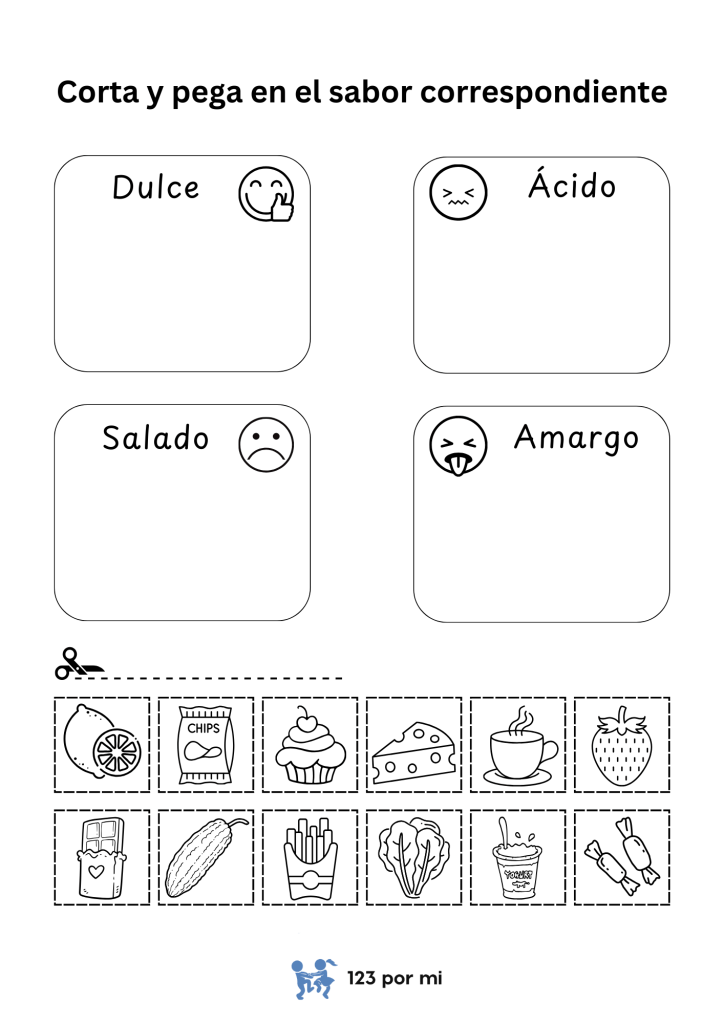
Corta y pega el sabor
Dibuja las expresiones

Sentimientos y emociones
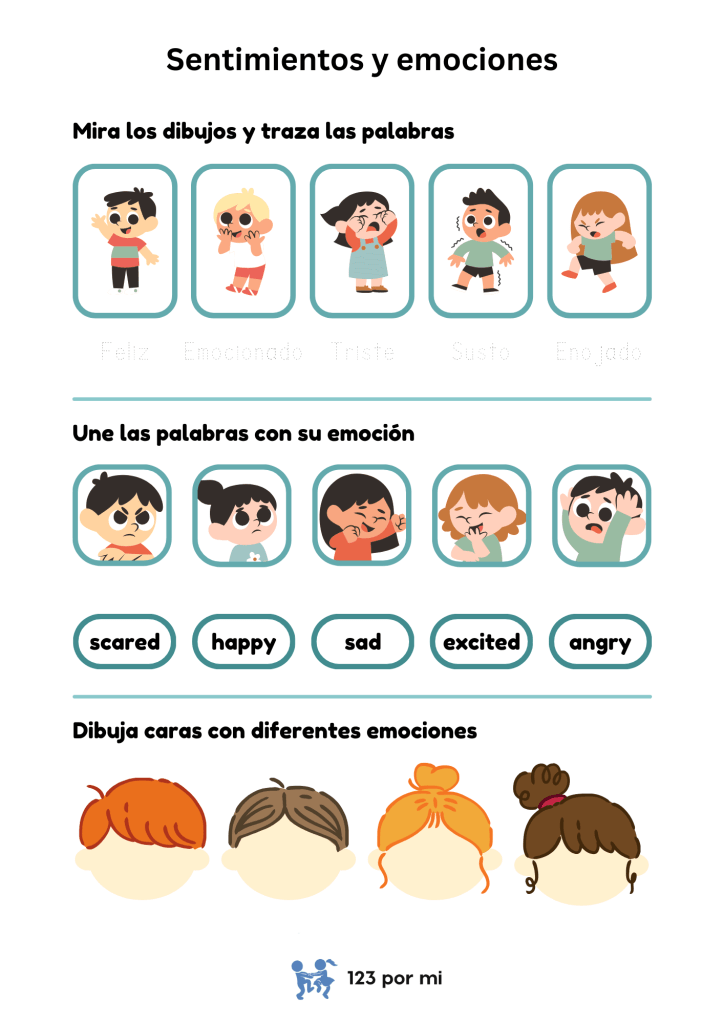
Selecciona las palabras correspondientes

Completa los números

Estimulación temprana en la infancia
La estimulación temprana es un pilar fundamental en el desarrollo infantil, ya que permite potenciar las habilidades cognitivas, emocionales, motoras y sociales de los niños desde sus primeros años de vida. Durante los primeros años, el cerebro tiene una plasticidad excepcional, lo que significa que está más receptivo a los estímulos del entorno y puede desarrollar conexiones neuronales que serán la base para futuros aprendizajes.
¿Qué es la estimulación temprana?
La estimulación temprana es el conjunto de actividades, experiencias y estrategias diseñadas para favorecer el desarrollo integral del niño desde su nacimiento hasta aproximadamente los seis años de edad. Estas actividades pueden incluir juegos, ejercicios físicos, interacción social y estimulación sensorial, todas enfocadas en fortalecer diferentes áreas del desarrollo infantil.
Beneficios de la estimulación temprana
- Desarrollo cognitivo: Ayuda a mejorar la atención, la memoria y la capacidad de resolución de problemas, lo que favorece el aprendizaje futuro.
- Desarrollo motor: Mediante actividades físicas adecuadas, los niños mejoran su coordinación, equilibrio y habilidades motrices finas y gruesas.
- Desarrollo emocional y social: Fomenta la seguridad, la autoestima y la capacidad de interactuar con otras personas, lo que facilita la socialización.
- Facilita el aprendizaje del lenguaje: La exposición temprana a sonidos, palabras y conversaciones promueve el desarrollo del lenguaje y la comunicación efectiva.
- Prevención de dificultades en el aprendizaje: Un niño que recibe estimulación temprana tiene más herramientas para afrontar los desafíos educativos y emocionales en etapas posteriores.
Estrategias para estimular a nuestros hijos
- Juego interactivo: Juegos de construcción, rompecabezas y juguetes sensoriales ayudan a desarrollar habilidades cognitivas y motoras.
- Lectura desde temprana edad: Leer cuentos y hablar con el niño favorece el desarrollo del lenguaje y la imaginación.
- Música y movimiento: Canciones, ritmos y bailes estimulan la coordinación, la memoria y la expresión emocional.
- Exploración sensorial: Dejar que los niños experimenten con diferentes texturas, colores y sonidos fortalece su desarrollo sensorial.
- Interacción social: Propiciar el contacto con otros niños y adultos ayuda a mejorar sus habilidades sociales y emocionales.
 123 por mi