

Autor: 123pormico
Frustration on children
If childhood had a list of inevitable experiences, school frustration would be in the top five, right alongside scraped knees and fights over who gets to play with the ball first. From an early age, we are taught that grades reflect our effort, intelligence, and, for some parents, even our worth as individuals. It doesn’t matter if you’ve learned something valuable in the process—if the result isn’t a perfect 10 (or an A+ for the more international crowd), the first thing you hear is: “Why didn’t you get a higher grade?”
The problem isn’t just academic pressure; it’s the imposition of perfection as the only valid goal. We grow up believing that making mistakes equals failure, that anything less than “excellent” is not good enough, and that if you just try hard enough, you should be able to get everything right, always. Spoiler alert: this isn’t true. And yet, here we are, watching kids and teenagers struggle because an 8 in math makes them feel like they’ll never be Einstein, or because a red mark on their essay feels like a judgment on their very existence.
Perfectionism isn’t just about wanting to improve; it’s the constant fear of disappointing others, of not being enough, of failing to meet the expectations of parents who, despite their good intentions, sometimes forget that their children aren’t robots programmed for automatic success. Phrases like “You have to be the best,” “You can always do better,” or “Why aren’t you like your cousin, who always gets straight A’s?” pierce a child’s self-esteem like darts, leaving a mark that’s hard to erase.
But here’s the great irony: real learning doesn’t happen in perfection; it happens in mistakes. The frustration of not getting something right the first time isn’t failure—it’s part of the process. And yet, many children grow up without permission to fail. Not because they don’t want to do well, but because they feel like their worth depends on it. As a result, the fear of failure turns into paralysis, anxiety replaces curiosity, and school stops being a place for learning and becomes a battlefield where the only goal is to win—or, in this case, to get the highest grades.
So, what can we do as adults to prevent school frustration from becoming a permanent shadow? First, change the conversation. Instead of asking, “Why didn’t you get a higher grade?” we can ask, “How did you feel about what you learned?” Instead of demanding perfection, we can value effort and progress. And most importantly, instead of making grades the center of school life, we can remind children that they are so much more than a number on a report card. It’s also essential to create an environment where learning itself is celebrated, where curiosity matters more than memorization, and where creativity and problem-solving skills are valued beyond a numerical grade.
Because at the end of the day, what we really want isn’t for kids to get straight A’s in every subject—it’s for them to grow up with the confidence that making mistakes is okay, that they can always improve without feeling like they’re not enough, and that their value doesn’t depend on a grade but on who they are as people. If we can help children associate learning with personal growth instead of fear of failure, we will be giving them an invaluable tool for life. And if you ever doubt whether you’re demanding too much, remember this: the goal isn’t to raise perfect kids, but happy, curious, and self-assured ones. Because true excellence isn’t in the final grade—it’s in the love for learning without fear of failure and in the ability to face challenges with resilience and confidence.
Verbos irregulares

Cuenta los animales

La frustración en el colegio
Si la infancia tuviera una lista de experiencias inevitables, la frustración escolar estaría en el top 5, junto con las rodillas raspadas y las peleas por quién juega primero con el balón. Desde pequeños nos enseñan que las notas son el reflejo de nuestro esfuerzo, nuestra inteligencia y, para algunos padres, incluso nuestro valor como personas. No importa si has aprendido algo valioso en el proceso, si el resultado no es un 10 (o un A+ para los más internacionalizados), lo primero que escuchas es: «¿Por qué no sacaste más?»
El problema no es solo la exigencia académica, sino la imposición de la perfección como única meta válida. Crecemos con la idea de que equivocarse es fracasar, que todo lo que no sea «excelente» es insuficiente y que, si te esfuerzas lo suficiente, deberías poder hacerlo todo bien, siempre. Spoiler: esto no es cierto. Y, sin embargo, aquí estamos, viendo a niños y adolescentes angustiados porque un 8 en matemáticas los hace sentir menos capaces que Einstein o porque un comentario rojo en su ensayo parece un juicio a su existencia misma.
El perfeccionismo no es solo una cuestión de querer mejorar; es el miedo constante a decepcionar, a no ser suficiente, a no cumplir con las expectativas de unos padres que, aunque tienen buenas intenciones, a veces olvidan que sus hijos no son robots programados para el éxito automático. Frases como «tienes que ser el mejor», «siempre puedes hacerlo mejor» o «¿por qué no eres como tu primo que siempre saca 10?» se clavan como dardos en la autoestima de los niños, dejando una marca difícil de borrar.
Pero aquí está la gran ironía: el aprendizaje real no ocurre en la perfección, sino en los errores. La frustración de no lograr algo a la primera no es un fracaso, es parte del proceso. Y, sin embargo, muchos niños crecen sin permiso para equivocarse. No porque no quieran hacerlo bien, sino porque sienten que su valor depende de ello. Como resultado, el miedo al error se convierte en parálisis, la ansiedad reemplaza la curiosidad y el colegio deja de ser un lugar para aprender y se convierte en un campo de batalla donde la única meta es ganar (o, en este caso, sacar la mejor nota).
Entonces, ¿qué podemos hacer como adultos para evitar que la frustración escolar se convierta en una sombra permanente? Primero, cambiar el discurso. En lugar de preguntar «¿Por qué no sacaste más?», podemos preguntar «¿Cómo te sentiste con lo que aprendiste?». En lugar de exigir la perfección, podemos valorar el esfuerzo y el progreso. Y, sobre todo, en lugar de hacer de las notas el centro de la vida escolar, podemos recordarles a los niños que son mucho más que un número en un boletín. También es importante fomentar un ambiente en el que se celebre el aprendizaje en sí mismo, en el que la curiosidad tenga más peso que la memorización y en el que se valore la creatividad y la capacidad de resolver problemas más allá de una calificación numérica.
Porque al final del día, lo que realmente queremos no es que saquen 10 en todas las materias, sino que crezcan con la confianza de que equivocarse está bien, que siempre pueden mejorar sin sentirse insuficientes y que su valor no depende de una calificación, sino de lo que son como personas. Si logramos que los niños asocien el aprendizaje con el crecimiento personal en lugar de con el miedo al error, les estaremos dando una herramienta invaluable para la vida. Y si alguna vez dudas sobre si estás exigiendo demasiado, recuerda esto: lo importante no es criar niños perfectos, sino niños felices, curiosos y seguros de sí mismos. Porque la verdadera excelencia no está en la nota final, sino en el amor por aprender sin miedo a fallar y en la capacidad de enfrentar desafíos con resiliencia y confianza en sí mismos.
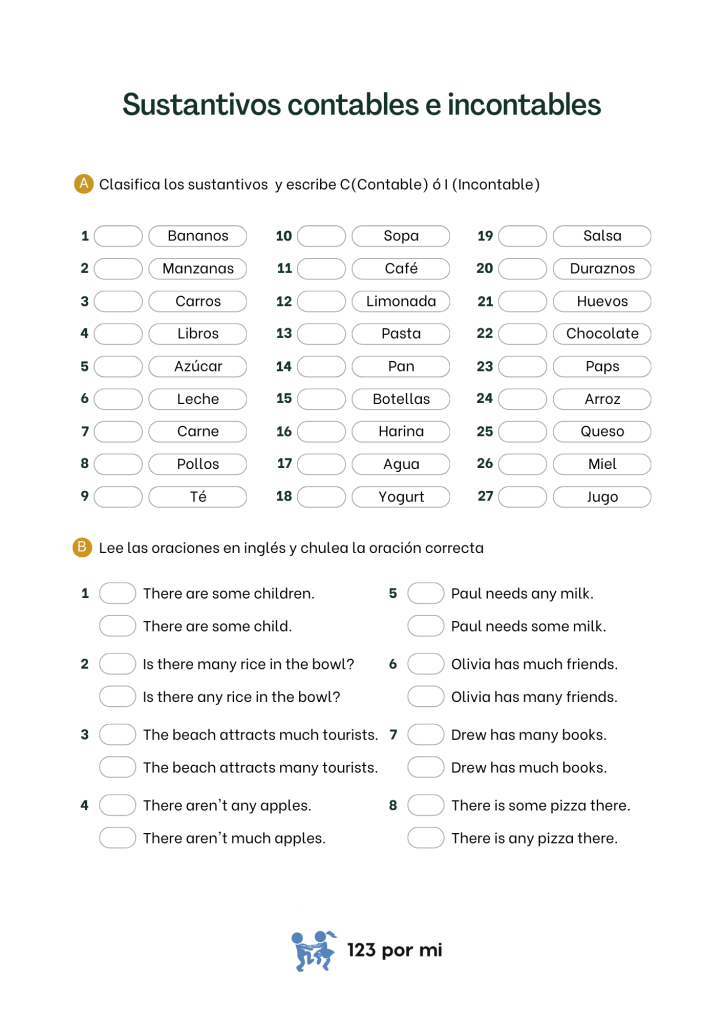
Sustantivos contables e incontables
Sinónimos

EP5 Dialoguemos la Infancia
EP 5 Pequeños científicos, grandes argumentos
¿En qué momento los niños dejan de creer que la luna los sigue y empiezan a corregirte la lógica con argumentos de abogado? En este episodio nos metemos de cabeza en la etapa de las operaciones concretas: donde la fantasía cede paso al pensamiento lógico, los juegos se llenan de reglas (¡y sanciones!) y la justicia infantil se vuelve más estricta que un juez de reality. Con Piaget y Vygotsky como copilotos, te contamos por qué tu hijo ahora te gana debates con ejemplos y por qué no puedes mover una sola galleta sin desencadenar una huelga. Un episodio para reír, entender y —con suerte— sobrevivir al nuevo orden lógico de la infancia.
https://open.spotify.com/episode/3s8M33hr5eqLVYPqz1Zn9J?si=8Sz9X3vbR0iAM6sxh6QU4g
Antónimos

How to Support Children with Autism
Autism is a neurodevelopmental disorder that affects how a person perceives and interacts with the world. People with autism may have difficulties with communication, social interaction, and behavior, but they also exhibit a wide range of strengths and special abilities. Supporting a child with autism requires understanding, patience, and a science-based approach to tailor educational and emotional strategies to their specific needs.
From a scientific perspective, it is known that autism has a complex biological basis involving both genetic and environmental factors. Research has shown that differences in brain connectivity and sensory processing play a significant role in how individuals with autism experience the world. This means interventions need to be personalized to address individual variations in sensory processing, communication, and behavior.
One of the most effective strategies for supporting children with autism is the use of behavior therapy-based interventions. Applied Behavior Analysis (ABA) therapy is one of the most studied and widely used, as it focuses on reinforcing positive behaviors while minimizing undesirable ones. Through repetition and positive reinforcement, children learn new skills such as verbal and non-verbal communication, problem-solving, and social skills.
It is equally important to consider the sensory differences that many children with autism experience. They may be hypersensitive or hyposensitive to stimuli such as light, sound, or touch. This can cause discomfort or distress, making it harder for them to adapt in settings such as school or home. To support a child with autism, it is essential to create a calm and structured environment by adjusting sensory stimuli according to their needs. In many cases, a multisensory approach that integrates visual, tactile, and auditory activities can be very beneficial.
Communication is another crucial aspect of supporting children with autism. Many children with autism have difficulty expressing their needs and emotions, which can lead to frustration. Augmentative and alternative communication (AAC) technologies and systems, such as the use of pictograms or electronic devices, can be powerful tools to enhance communication. These tools allow children to express their thoughts and needs more effectively, reducing frustration and improving their quality of life.
Additionally, it’s vital to foster a social support network, both at home and in the community. Social skills training, such as interactions with other children and adults, is essential for children with autism to learn how to navigate interpersonal relationships. While children with autism may have difficulty interpreting social cues, with practice and support, they can learn to understand social norms, share, and work as a team.
It is important to remember that every child with autism is unique, and what works for one may not be effective for another. The key is to observe and understand your child’s individual needs and tailor support strategies accordingly. Early intervention is especially important, as studies have shown that the earlier appropriate strategies are implemented, the higher the chances of success in the child’s development.
Finally, while these strategies can be helpful, it is always essential to seek support from professionals experienced in autism. Psychologists, occupational therapists, speech therapists, and other specialists can offer a more personalized and effective approach, tailored to each child’s specific needs. Teamwork between the family and professionals is crucial in providing the best possible support and ensuring the well-being of children with autism throughout their development.
 123 por mi